


Jamie Cox & Carl Gazzard on Somerset’s first T20 matches
T20 cricket has taken the world by storm.
However, when Somerset played their first T20 match in 2003, no one had any inclination that this new format would become so popular.
Back in 2003, Somerset’s opening batters were Jamie Cox and Carl Gazzard. We met up with them recently armed with the scorecards of Somerset’s opening few T20 matches to see what they remembered.
What were your thoughts on the new format, and did you have any idea that it was going to become so big?
Jamie Cox: “We definitely didn’t know. I do vividly recall the first game that we played here against Warwickshire because we were staggered by the amount of people who came to watch. It was a different crowd too. We were used to playing in front of good crowds at Taunton, but this was a different crowd. It was a party crowd, and it was good fun. I don’t remember there being a lot of strategy involved, and it was a case of going out there, freeing yourself up and trying to hit as many balls into the stands as you could. It was fun to play but it wasn’t very fulfilling. It felt like you were putting on entertainment rather than playing a cricket match. It probably came at the right time for the game but none of us saw where it was going to go.
“We did learn things quite quickly about the format. Originally, it was felt that there wasn’t really any room for spin, but some teams had early success with spin, so there were some quick learnings. Back then a few felt that it was a bit gimmicky and that it was like playing in an exhibition match.
“20 overs doesn’t sound like many but you realise quite quickly that it’s longer than you think. You have more time than we actually appreciated. Undoubtedly, I think that aspect has had a positive impact on other formats. 50-over cricket has certainly benefited from people understanding that you can actually take your time because you know you can catch up at the back end. I think most teams now all prefer to chase in 50-over cricket because of the skills that they’ve learned in T20.”
Carl Gazzard: “As a young player at the time, I thought it was brilliant. I don’t think that some of the more experienced and rounded pros thought the same way though. I think that some of the Members and supporters felt like it was a bit of a gimmick. We didn‘t really know where it was going to go or what was going to happen. There’s no way that anyone would have predicted what T20 cricket would go on to become.
“Like Jamie says, there was certainly a different kind of crowd. It was almost like it was a game that the person on the street was attracted to rather than a stereotypical cricket fan. You heard it called a football crowd because there was a bit more shouting and hollering.
“Training was a bit different too. It was a case of let’s try this and let’s try that. Everyone was trying to do something a bit different. I was a bit bizarre to start with and you were having to think on your feet. It took a few games to work out how to play the game properly.
“We thought that this might be around for a couple of years and that will be the end of it. I think games like the win at Glamorgan started to get people interested. It was good fun and then good fun turns into people turning up, and when people turn up revenue goes up. From that point you can see how it might work. Then the prize money goes up and clubs start taking it more seriously. Now people have white ball only contracts and that says it all.
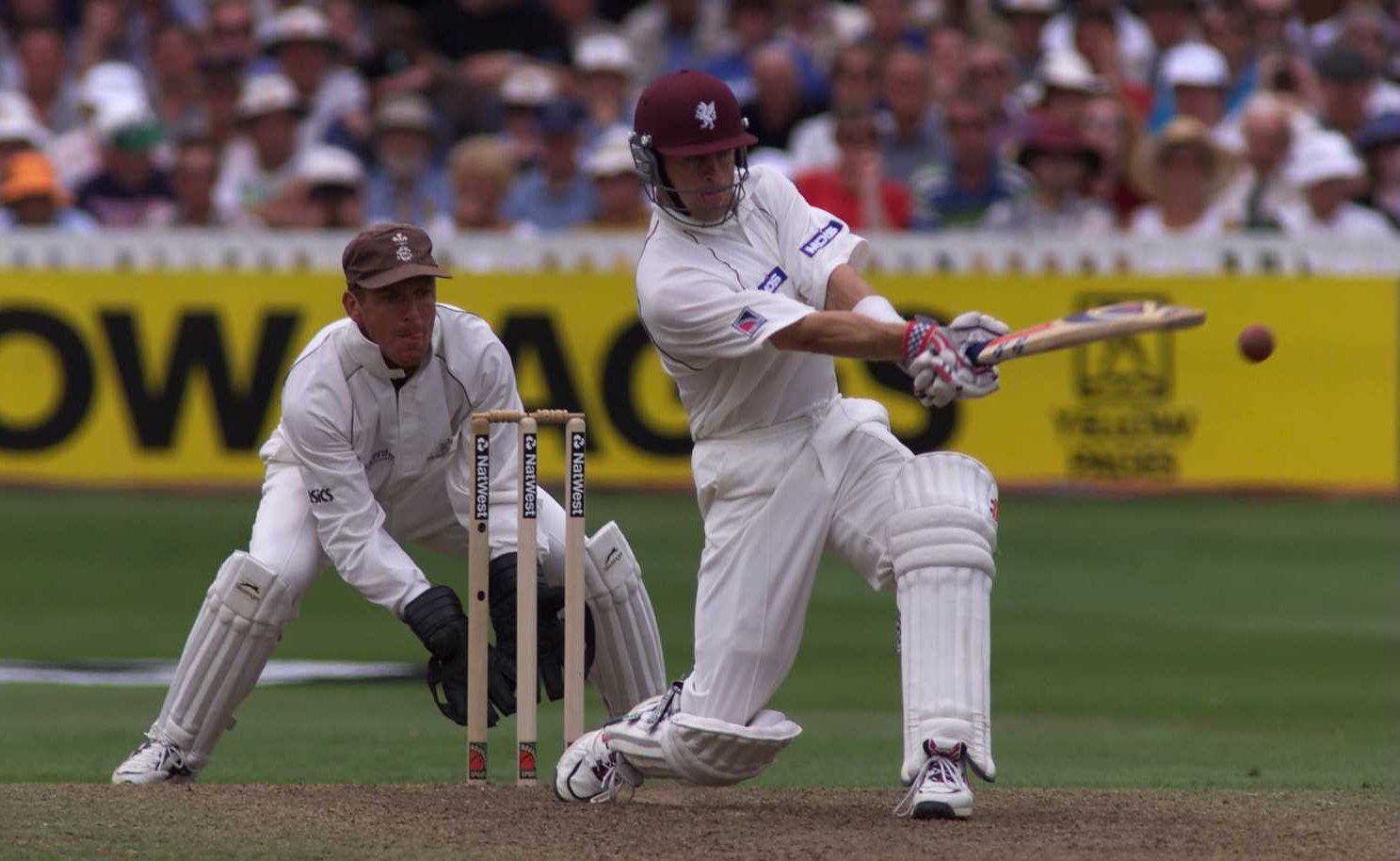
The first T20 match was a home game against Warwickshire. Somerset fell 20 runs short chasing 188 despite Jamie making 47 from just 27 deliveries. What do you remember about that match?
CG: “It was very much a case of sending the sloggers in, getting as many as you can, and then seeing what happens next. It then became apparent that you were facing a new white ball and quality bowlers, so everyone reverted to playing properly again quite quickly! It was certainly an interesting time.
“188 felt like a very good score back then. You’d probably get that in about 10 overs now but back then we certainly felt like they’d got a very good score. I don’t think anyone really knew what they were doing in that first game so I think we just stuck them in to see what they could get and then see if we could chase it.”
JC: “I remember fielding on the side of the ground where the Caddick Pavilion now is, and it felt like the game really got away from us. They got 188, which by today’s standards at Taunton is very chasable, but there was a feeling that we were behind the game at the halfway stage. There wasn’t much science behind the chase either compared with how things are analysed these days.
“I only played a handful of T20 games, and I wasn’t really renowned for scoring all that quickly, but I just remember feeling a sense of freedom in those early games. It wasn’t really my game to hit every ball out of the ground, but I do remember hitting Waqar Younis back over his head for six which gave me a real buzz. There was almost a sense that I’d wasted 20 years of my career just blocking it when this was way more fun!”
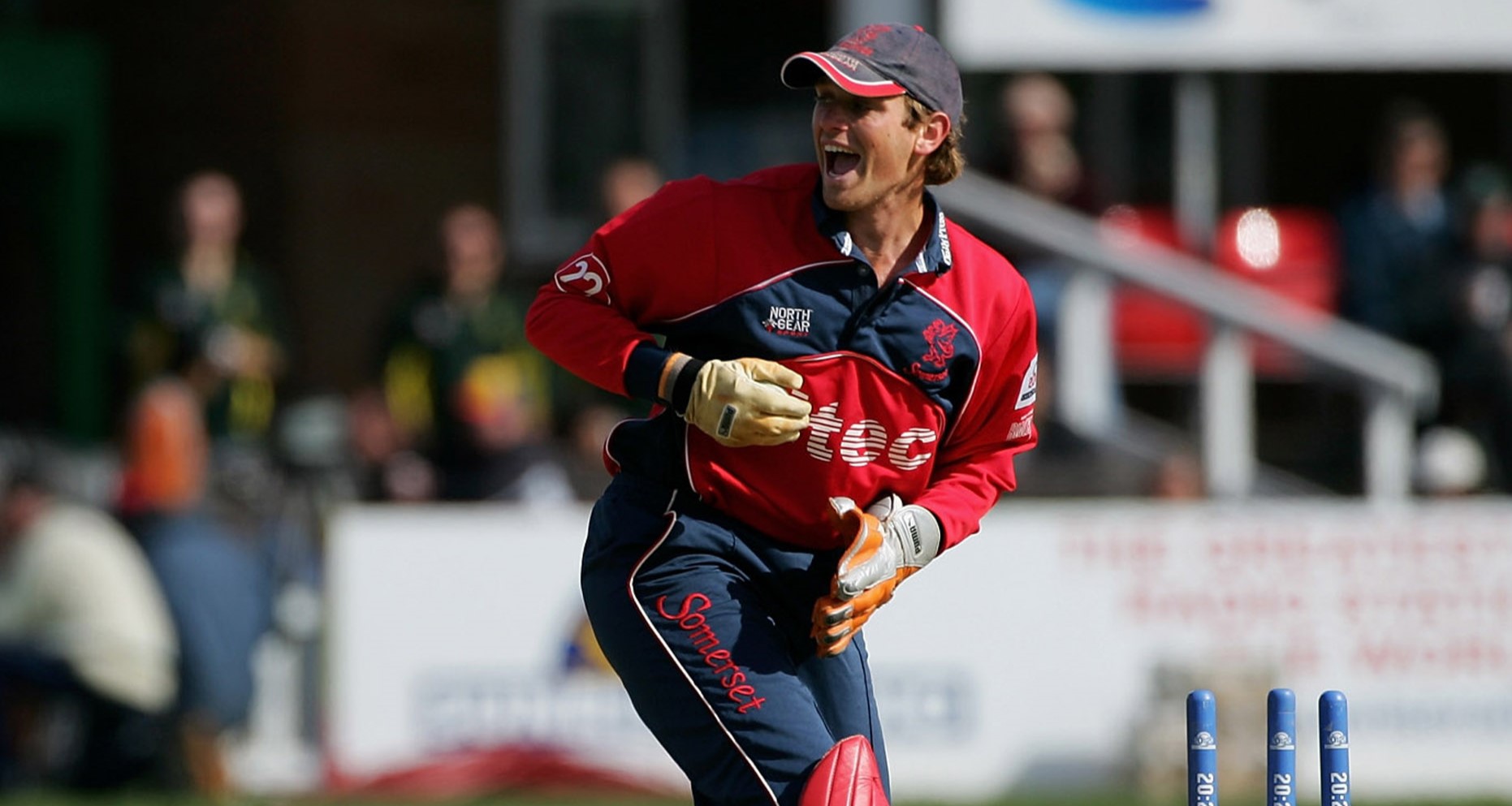
The first win in the format came at Glamorgan five days later. Jamie (53) and Carl (26) shared an opening stand of 61 to help Somerset to a seven-wicket win. What are your recollections of that day in Cardiff?
JC: “The toss was pretty important because there was light drizzle all day. It was a wet day, and batting dominated because the bowlers couldn’t execute properly because the ball got very wet very quickly. The fact that they won the toss and batted was a bit of a surprise.
“We were chasing 194 and we still didn’t really know if that was a good score or not. There was a feeling that they’d got there so we could too. We got off to a bit of a flyer and it ended up being a comfortable chase.
“I don’t remember a lot about my innings but looking at the scorecard now it’s interesting to see that Michael Kasprowicz went for 54 off three overs. I played a lot of cricket against him and I didn’t get on top of him too often, so it was probably the first time that I’d had fun playing against him.”
CG: I definitely thought it was game over when they posted 193. I thought they had too many. We went out there all guns blazing and tried to put every ball in the River Taff. Unfortunately, the river was too straight for me because I did everything on the leg side. I wasn’t looking forward to facing an Australian Test match bowler in the rain.
“Jamie and I had very contrasting styles and I remember him playing stunning cover drives and smashing it through the off side whilst I was at the other end trying to club it the other way. I remember taking to him in the middle and we couldn’t really see the ball that well but whatever we did it seemed to work for a while. It was one of those evenings where we just managed to keep walloping it.
“It was always great going to Sophia Gardens back then because it was a pretty tight ground, it was pretty rowdy and there was a stand right next to the changing rooms.”
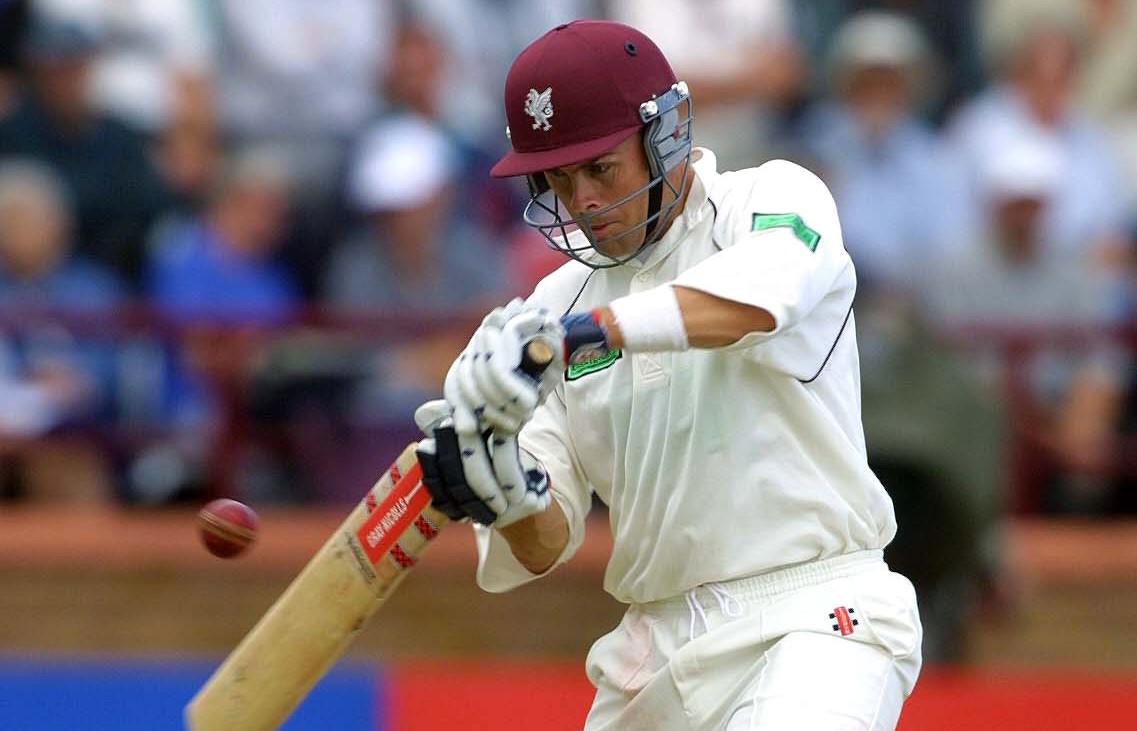
Is it a format you wish you’d played in more?
JC: “Looking back at the scorecards from 2003, I was quite surprised that I had success in those games. I joke that I played about six T20 games and had a strike rate of about 150, which is pretty good even by today’s standards. However, if I’d played 12 games, I think that strike rate would come down a bit! I preferred playing 50-over cricket and four-day cricket.”
T20 cricket has in many ways revolutionised the game. Can you see anything in the future having such a big impact on the game?
CG: “There will naturally have to be adjustments to it and you might see a huge six out of the ground being worth 12 or something like that, but it’s hard to see anything seismically changing in a similar way. There’s bound to be something else and we’ve seen T10 competitions around the world but T20 seems like the shortest format that you could have and it works. I think there will be something but I don’t know what that will look like.”